Exploits
total : 29thttpd ≤ 2.04 Remote Denial of Service - for Linux
A private remote denial-of-service exploit targeting the thttpd web server, version 2.04 and earlier.
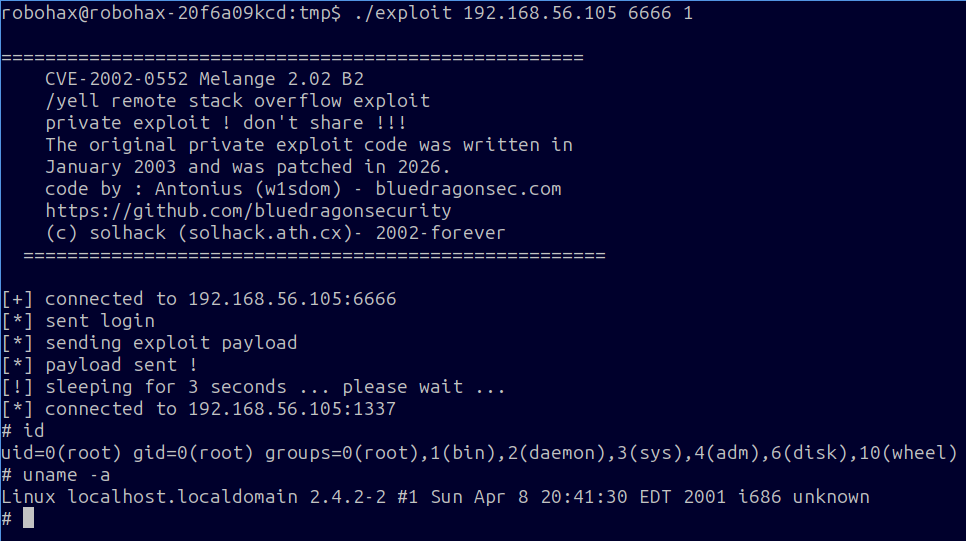
CVE-2002-0552 - Melange Chat Server 2.02 Remote Stack Overflow - for x86 Linux
A private remote stack overflow exploit for the Melange Chat Server 2.02 B2 /yell command, targeting Red Hat 7.1-7.3 on x86 Linux. Originally written in January 2003.
Supported targets: Red Hat 7.1, 7.2, 7.3.
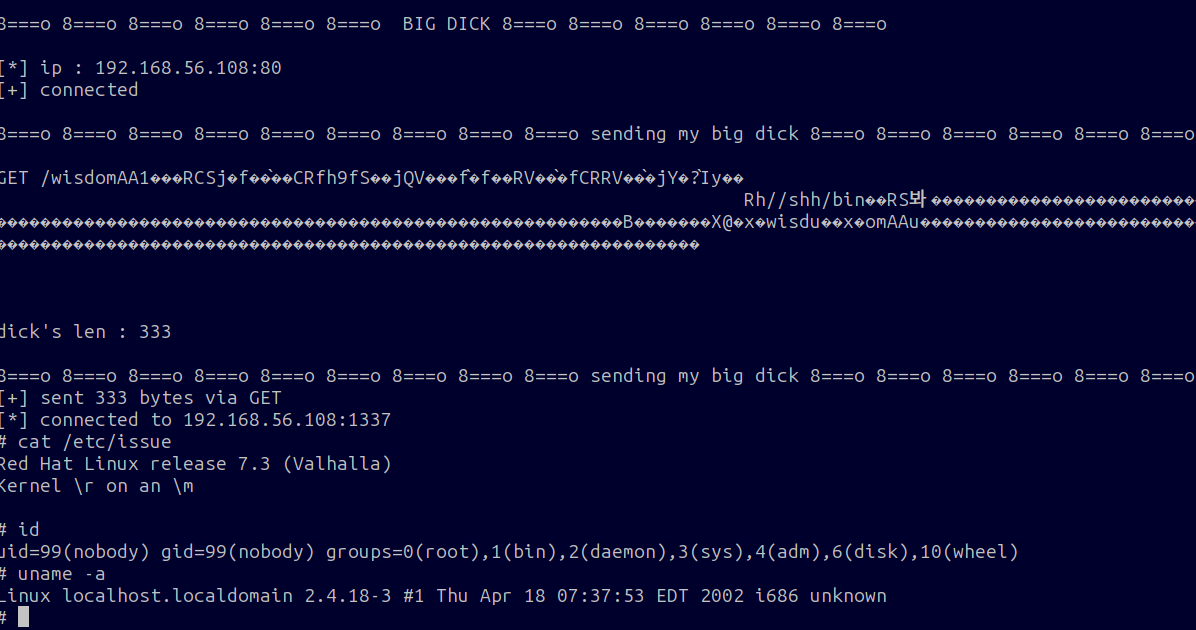
CVE-2002-1904 - GazTek ghttpd 1.4 Remote Stack Overflow - for x86 Linux
A private remote stack overflow exploit for GazTek ghttpd 1.4 - 1.4.3, targeting Red Hat 7.1-7.3 on x86 Linux. Originally written in 2002.
Supported targets: Red Hat 7.1, 7.2, 7.3.
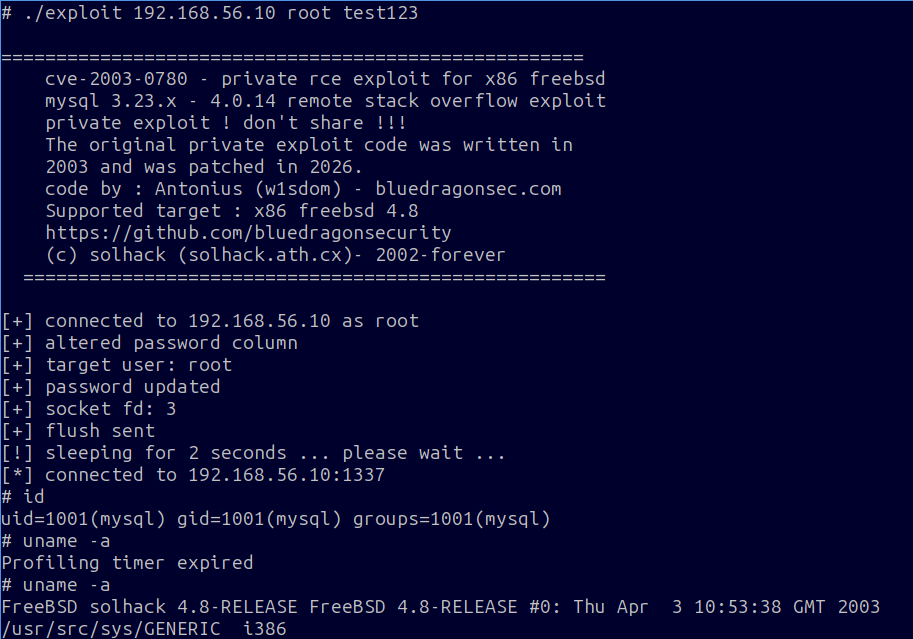
CVE-2003-0780 - MySQL 3.23.x - 4.0.14 Remote Stack Overflow - for x86 FreeBSD
A private remote stack overflow exploit for MySQL 3.23.x through 4.0.14, targeting FreeBSD 4.8 on x86. Originally written in 2003.
Supported target: FreeBSD 4.8 (x86).
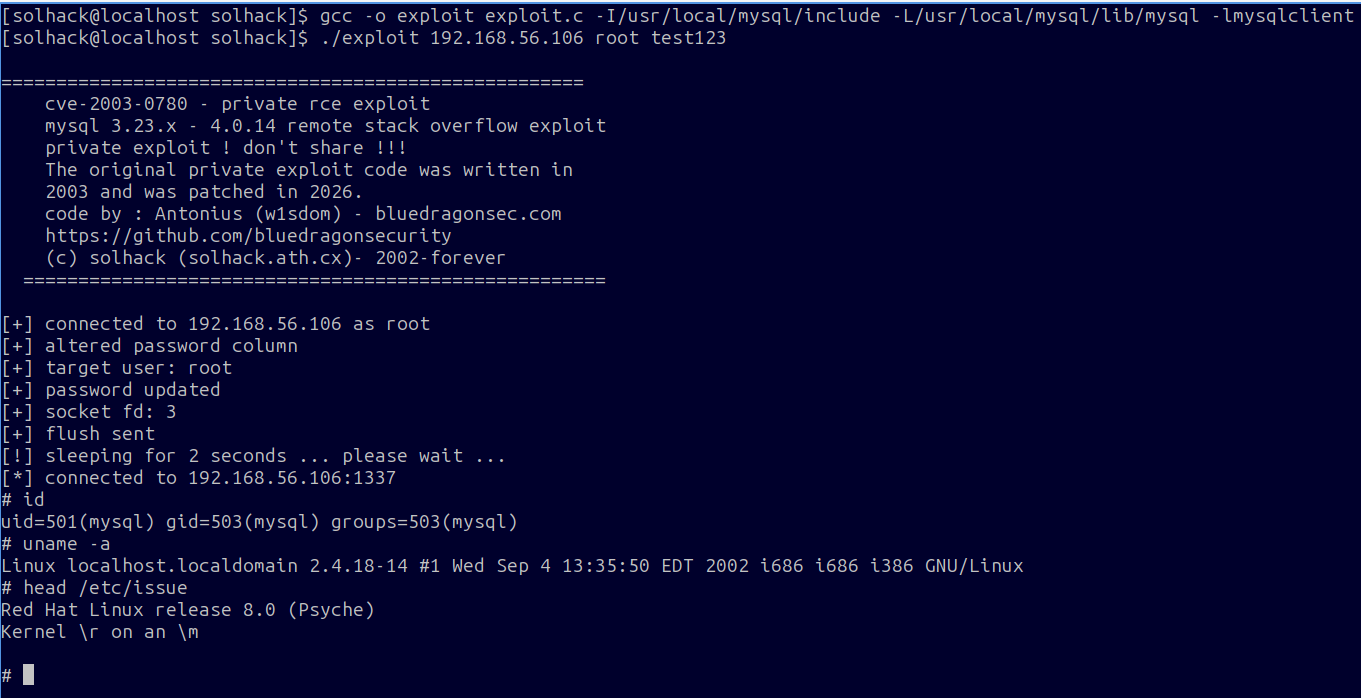
CVE-2003-0780 - MySQL 3.23.x - 4.0.14 Remote Stack Overflow - for x86 Linux
A private remote stack overflow exploit for MySQL 3.23.x through 4.0.14, targeting Red Hat 8.0 on x86 Linux. Originally written in 2003.
Supported target: Red Hat 8.0.
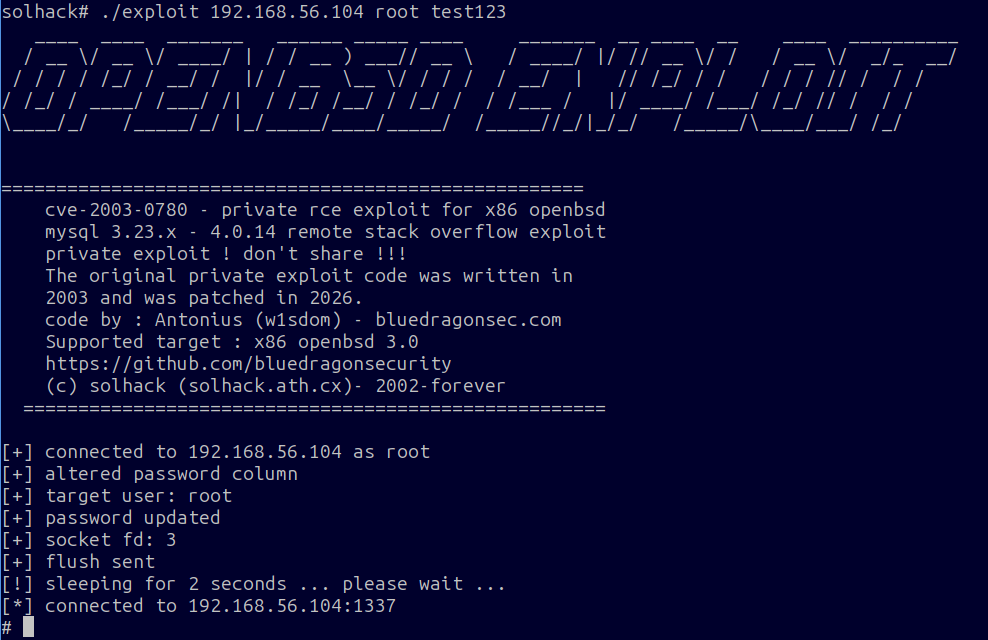
CVE-2003-0780 - MySQL 3.23.x - 4.0.14 Remote Stack Overflow - for x86 OpenBSD
A private remote stack overflow exploit for MySQL 3.23.x through 4.0.14, targeting OpenBSD 3.0 on x86. Originally written in 2003.
Supported target: OpenBSD 3.0 (x86).
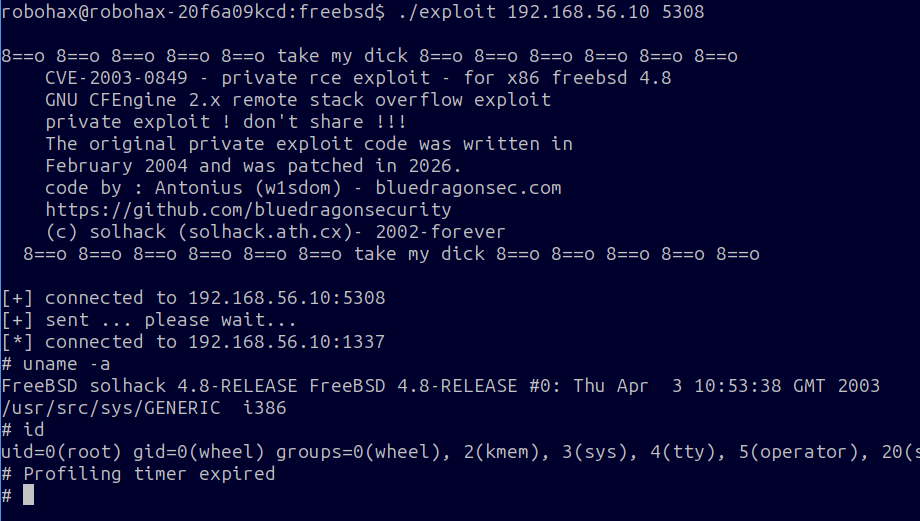
CVE-2003-0849 - GNU CFEngine 2.x Remote Stack Overflow - for x86 FreeBSD
A private remote stack overflow exploit for GNU CFEngine 2.x, targeting FreeBSD 4.8 on x86. Originally written in 2003.
Supported target: FreeBSD 4.8 (x86).
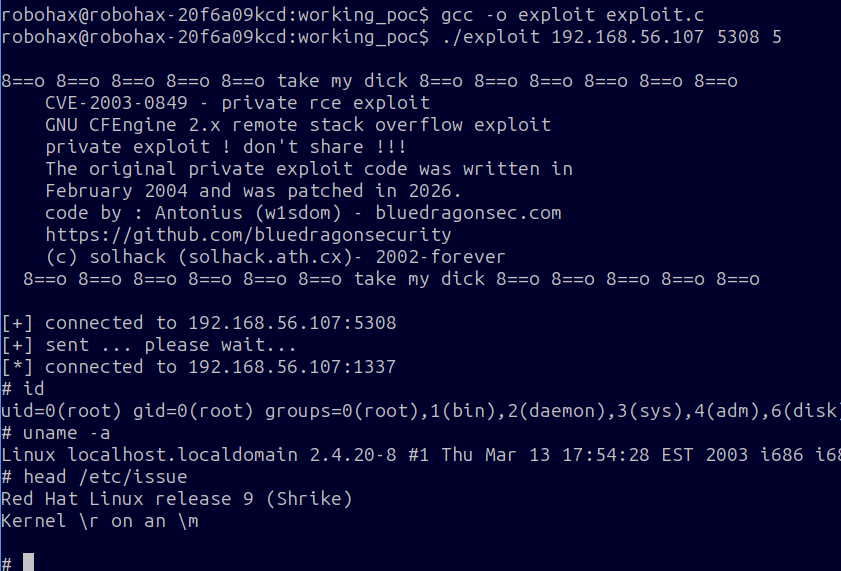
CVE-2003-0849 - GNU CFEngine 2.x Remote Stack Overflow - for x86 Linux
A private remote stack overflow exploit for GNU CFEngine 2.x, with return-address offsets mapped across five Red Hat releases. Originally written in 2003.
Supported targets: Red Hat 7.1, 7.2, 7.3, 8.0 and 9.0, each with its own libc offset.
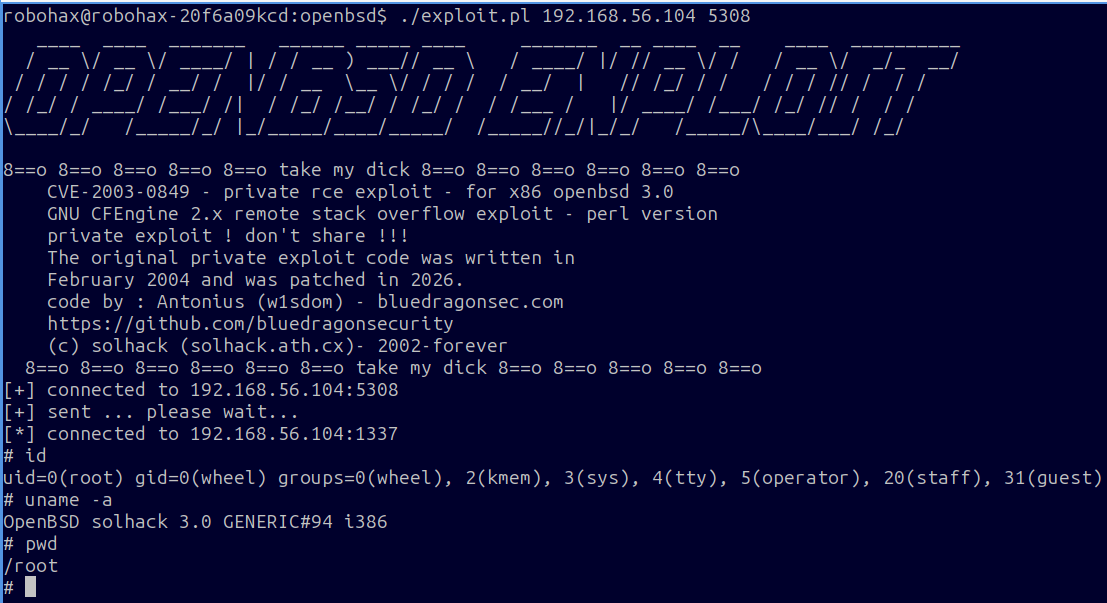
CVE-2003-0849 - GNU CFEngine 2.x Remote Stack Overflow (Perl) - for x86 OpenBSD
A Perl port of the private GNU CFEngine 2.x remote stack overflow exploit, targeting OpenBSD 3.0 on x86. Originally written in February 2004.
Supported target: OpenBSD 3.0 (x86).
CVE-2003-0849 - GNU CFEngine 2.x Remote Stack Overflow (C) - for x86 OpenBSD
The C version of the private GNU CFEngine 2.x remote stack overflow exploit, targeting OpenBSD 3.0 on x86. Originally written in February 2004.
Supported target: OpenBSD 3.0 (x86).
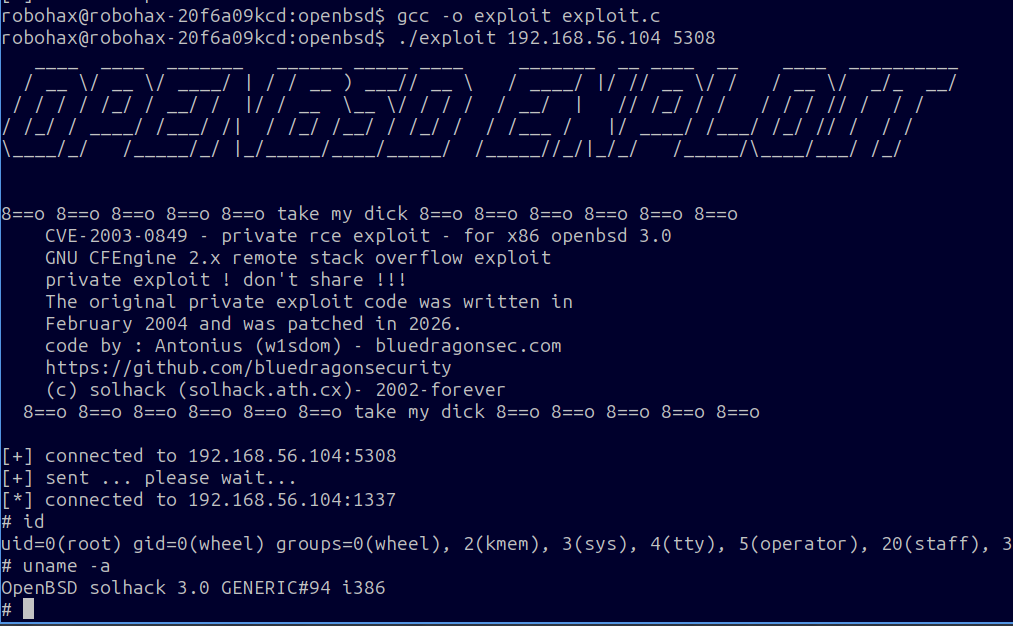
CVE-2004-0397 - Subversion 1.0.2 Remote Stack Overflow (Perl) - for x86 FreeBSD
A Perl version of the private Subversion 1.0.2 remote stack overflow exploit, targeting FreeBSD 4.8 and 4.10 on x86. Originally written in 2004.
Supported targets: FreeBSD 4.10, FreeBSD 4.8.
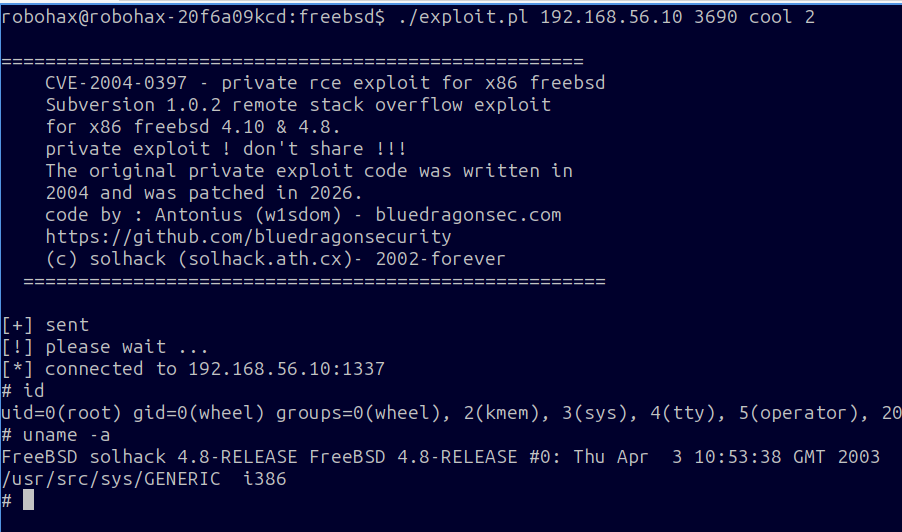
CVE-2004-0397 - Subversion 1.0.2 Remote Stack Overflow (C) - for x86 FreeBSD
The C version of the private Subversion 1.0.2 remote stack overflow exploit, targeting FreeBSD 4.8 and 4.10 on x86. Originally written in 2004.
Supported targets: FreeBSD 4.10, FreeBSD 4.8.
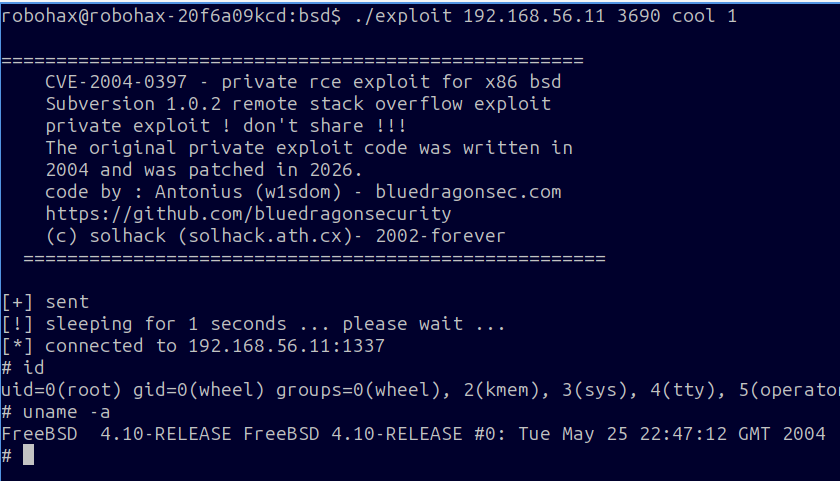
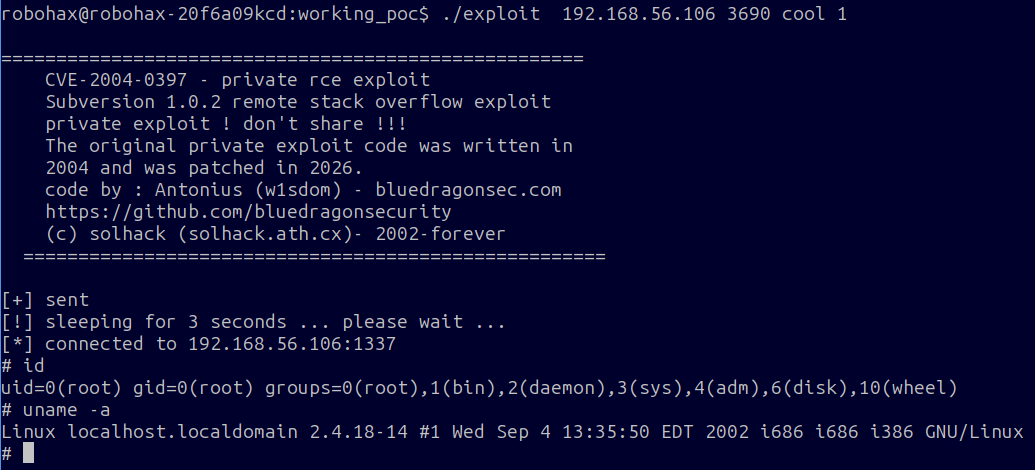
CVE-2004-0397 - Subversion 1.0.2 Remote Stack Overflow - for x86 Linux
A private remote stack overflow exploit for Subversion 1.0.2, targeting Red Hat 8.0 and 9.0 on x86 Linux. Originally written in 2004.
Supported targets: Red Hat 8.0, Red Hat 9.0.
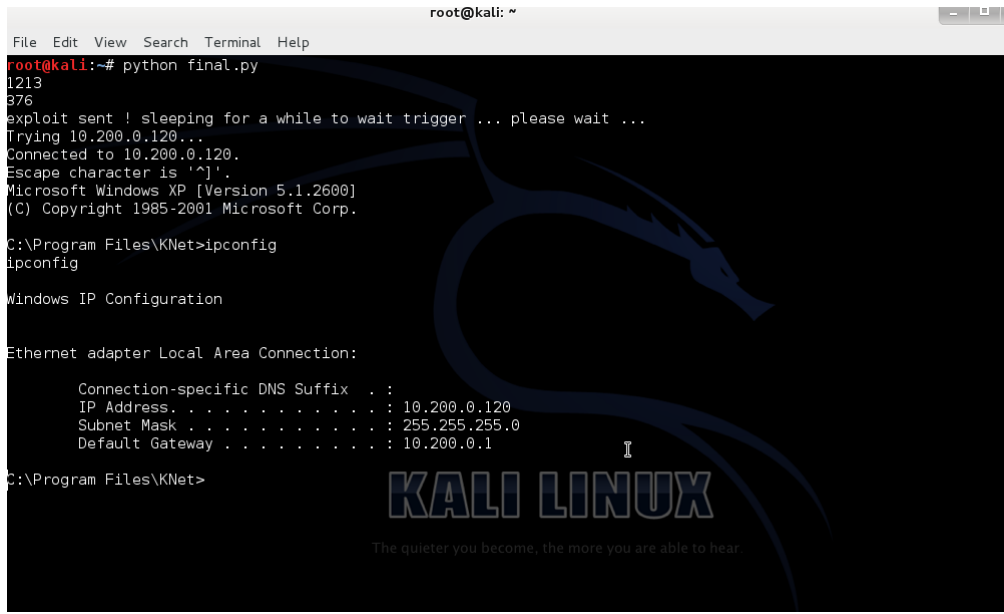
KNet Web Server 1.04b Remote Buffer Overflow (SEH) - for Windows
A remote buffer overflow exploit using SEH overwrite against KNet Web Server 1.04b.
Apache Tomcat < 6.0.18 UTF-8 Directory Traversal - for Linux
A directory traversal exploit abusing UTF-8 encoded request paths in Apache Tomcat before 6.0.18 to read arbitrary files such as /etc/passwd.
CVE-2011-1485 - pkexec / polkitd Race Condition LPE - for Linux
A local privilege escalation exploit abusing a race condition between pkexec and polkitd 0.96. Developed in 2011.
CVE-2011-3192 - Apache Range Header Remote Denial of Service - for Linux
A remote denial-of-service exploit targeting the Range header handling in Apache 1.3.x, 2.0.64 and earlier, and 2.2.19 and earlier. Developed in 2011.
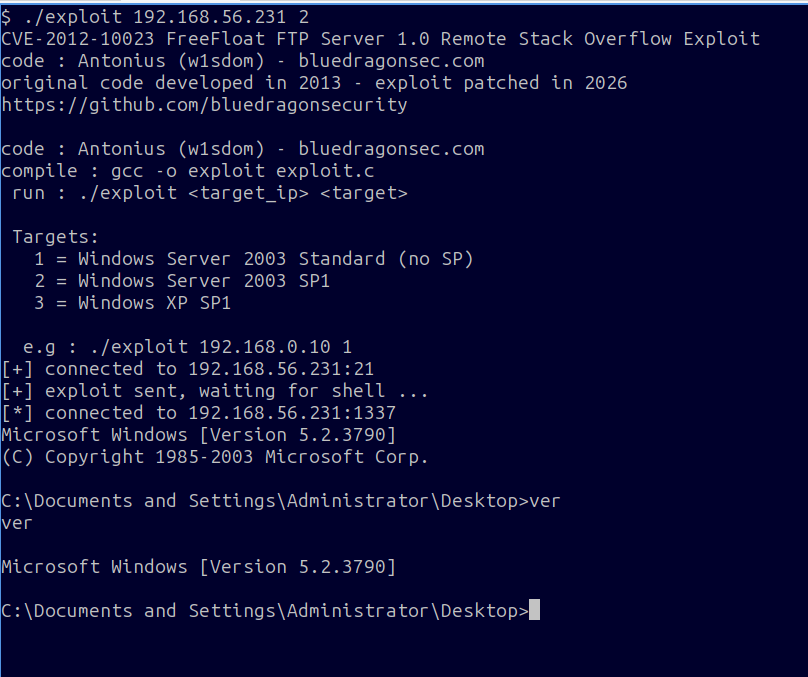
CVE-2012-10023 - FreeFloat FTP Server 1.0 Remote Stack Overflow - for Windows
A private remote stack overflow exploit for FreeFloat FTP Server 1.0, targeting several Windows Server 2003 and XP builds.
Supported targets: Windows Server 2003 Standard (no SP), Windows Server 2003 SP1, Windows XP SP1.
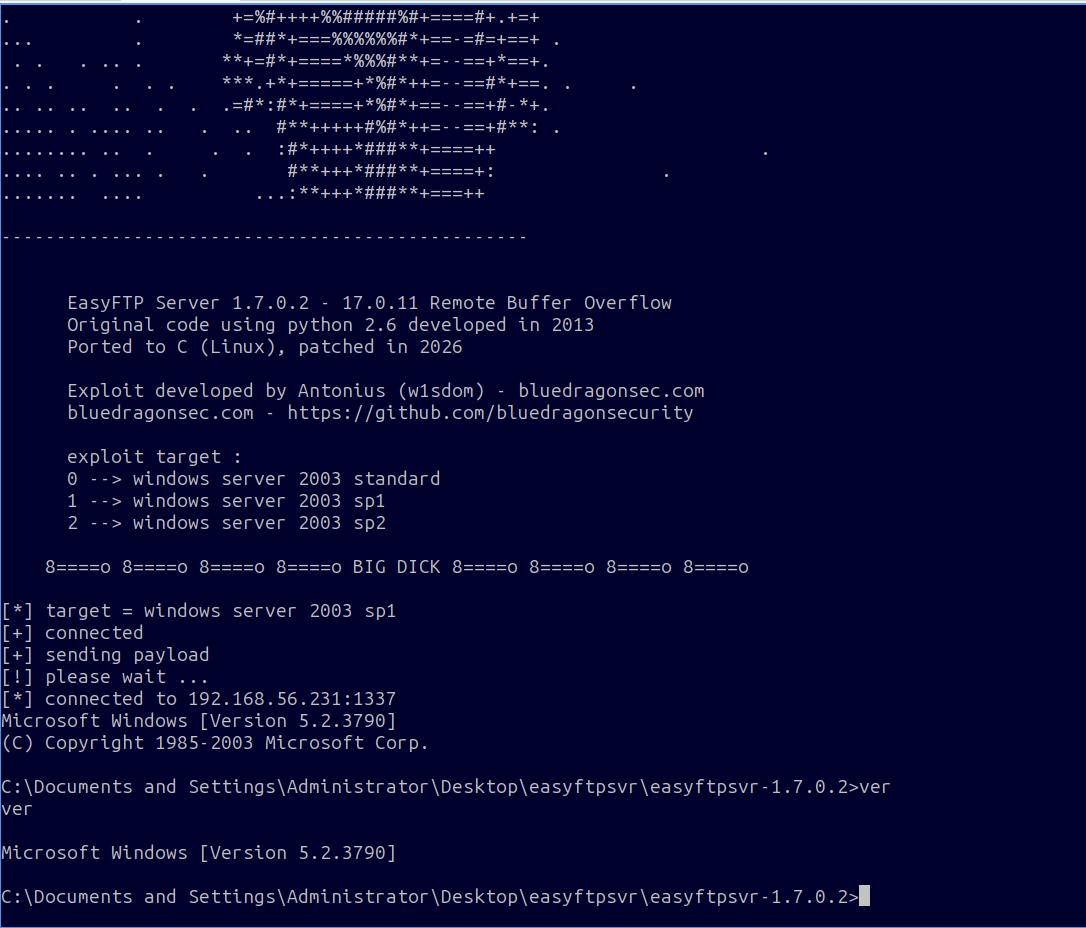
EasyFTP Server 1.7.0.2 - 17.0.11 Remote Buffer Overflow (C) - for Windows
A C port of the EasyFTP Server 1.7.0.2 - 17.0.11 remote buffer overflow exploit, originally written in Python in 2013.
Supported targets: Windows Server 2003 variants.
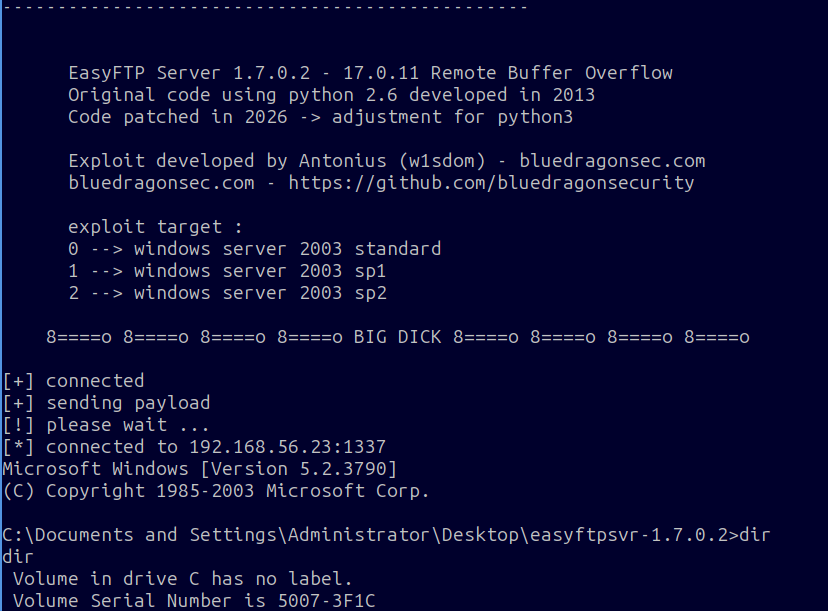
EasyFTP Server 1.7.0.2 - 17.0.11 Remote Buffer Overflow (Python) - for Windows
The original Python version of the EasyFTP Server 1.7.0.2 - 17.0.11 remote buffer overflow exploit, written in 2013.
Supported targets: Windows Server 2003 variants.
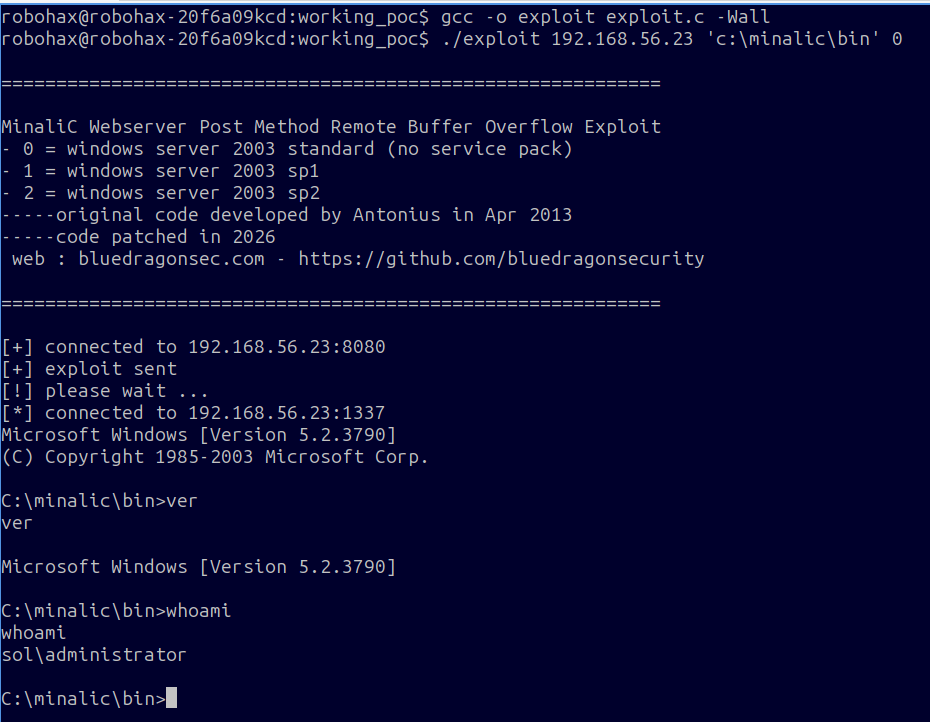
MinaliC Webserver 2.0.0 POST Method Remote Stack Overflow (C) - for Windows
A private remote stack overflow exploit for MinaliC Webserver 2.0.0 using the HTTP POST method - a different code path from the more commonly known GET-based vulnerability. Written in April 2013.
Supported targets: Windows Server 2003 (no SP, SP1, SP2).
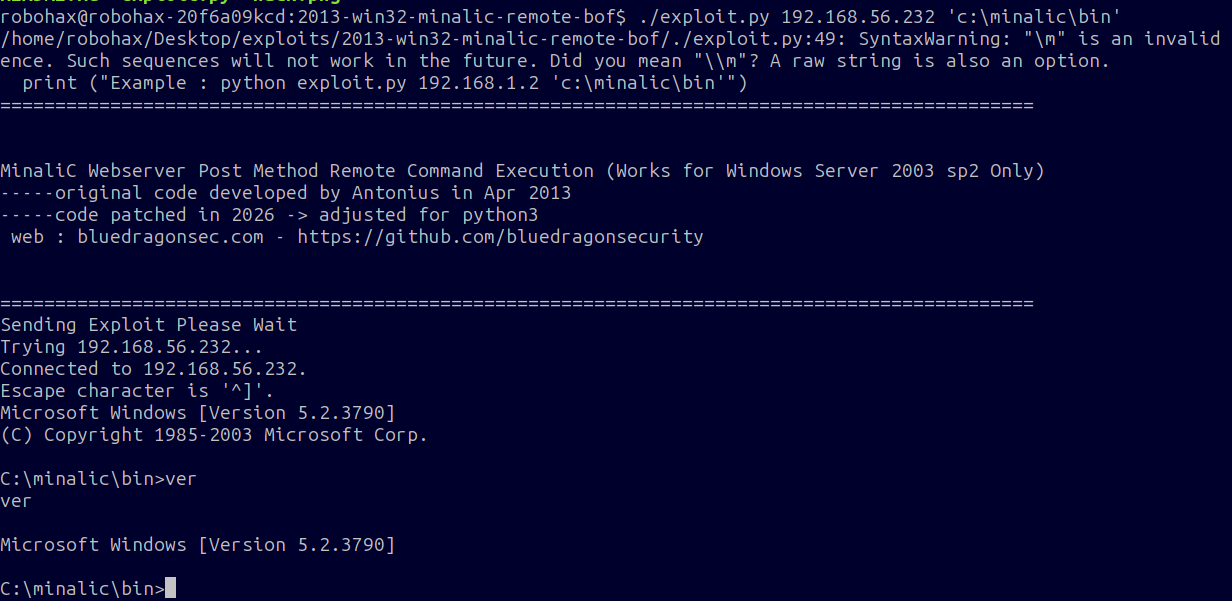
MinaliC Webserver 2.0 Remote Stack Overflow (Python, POST) - for Windows
The Python version of the MinaliC Webserver 2.0 POST-method remote buffer overflow exploit, written in 2013.
Target: Windows Server 2003 SP2, English.
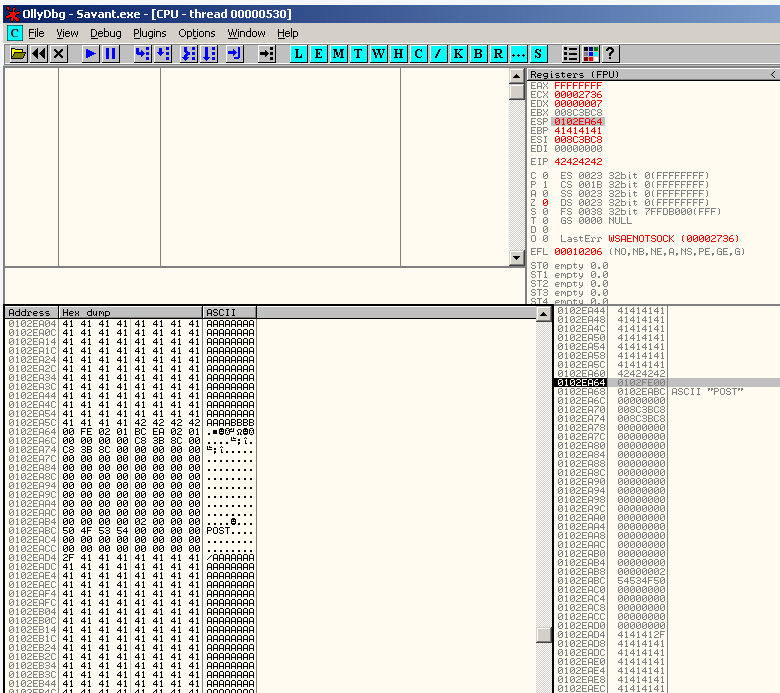
Savant Web Server 3.1 POST Method Buffer Overflow Denial of Service - for Windows
A remote denial-of-service exploit triggered via a malformed HTTP POST request against Savant Web Server 3.1.
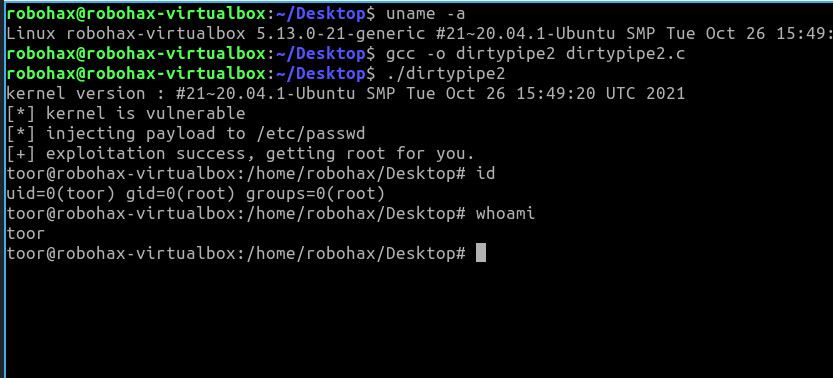
CVE-2022-0847 - DirtyPipe2 Local Privilege Escalation - for Linux Kernel 5.8 < 5.15.25
A local privilege escalation exploit for the Dirty Pipe vulnerability in Linux kernel 5.8 through 5.15.25, tested against Lubuntu/Ubuntu 20.04 kernels.
Original vulnerability discovered by Max Kellermann (CM4all GmbH / IONOS SE).
rldns 1.0 - 1.3 Remote Denial of Service - for Linux
A remote denial-of-service exploit for rldns, an open-source DNS server self-developed for research purposes, versions 1.0 through 1.3.
CVE-2026-46215 - Linux Kernel 7.0 DRM Use-After-Free LPE
A local privilege escalation exploit for a Use-After-Free vulnerability in the Linux kernel DRM subsystem, adapted for kernel 7.0 through 7.0.8 using a novel cross-cache technique named SheafJack / SheavesSiphon.
Requires text-mode boot and the user to be in the video group so /dev/dri can be opened.
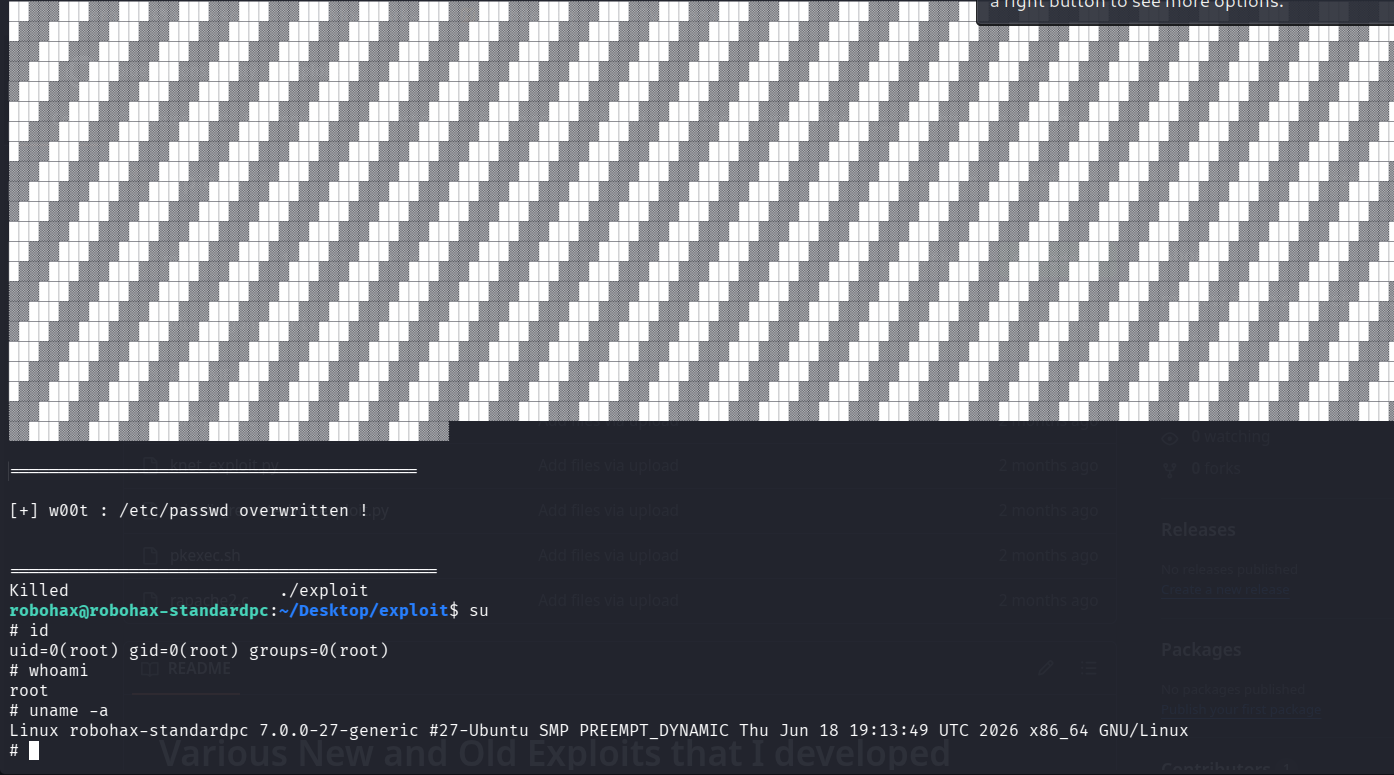
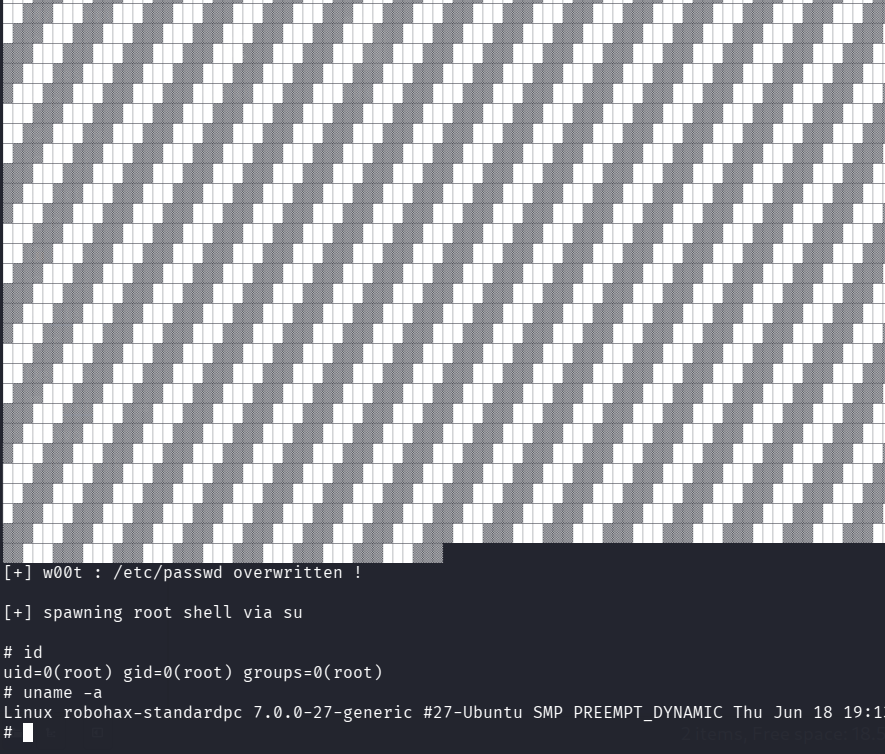
CVE-2026-46215 - Linux Kernel 7.0 DRM Use-After-Free LPE (v2, More Stable)
A more stable and reliable second iteration of the DRM Use-After-Free exploit for Linux kernel 7.0 through 7.0.8, using the SheavesSiphon cross-cache technique with an added progress indicator.
Requires text-mode boot and the user to be in the video group so /dev/dri can be opened.
Buptlab DNS Relay Server Remote Denial of Service - for Linux
A remote denial-of-service exploit targeting the Buptlab DNS relay server.
LiteDNS Server Remote Denial of Service - for Linux
A remote denial-of-service exploit targeting the LiteDNS server.